

You’ve probably heard about the importance of vitamin D, particularly for bone health
in this context. But did you know that vitamin D is actually a very important
a component of hormones, which plays a key role in hormonal balance
in maintaining it? If you get tired easily, find it hard to lose weight, or have irregular
If you’re on your period, or perhaps going through a stressful time, it’s quite possible that D-
vitamin deficiency stands in the background.
Vitamin D deficiency – a silent problem with serious consequences
Vitamin D deficiency is extremely common, particularly during the autumn and winter months, when there is less
We get some sunlight. But the modern lifestyle – spending less time outdoors,
Processed foods and chronic stress – these can cause problems all year round.
Symptoms of vitamin D deficiency:
Chronic fatigue, lack of energy
Low mood, tendency towards depression
Frequent infections, weakened immune system
Hair loss, dry skin
Weight gain, slowed metabolism
Menstrual disorders, worsening of PCOS
If you notice several of these symptoms in yourself, it’s worth Have your vitamin D levels checked and take supplements if necessary!
Without adequate vitamin D levels, it is almost impossible to optimise hormonal
operation.
Why is vitamin D so important for the endocrine system?
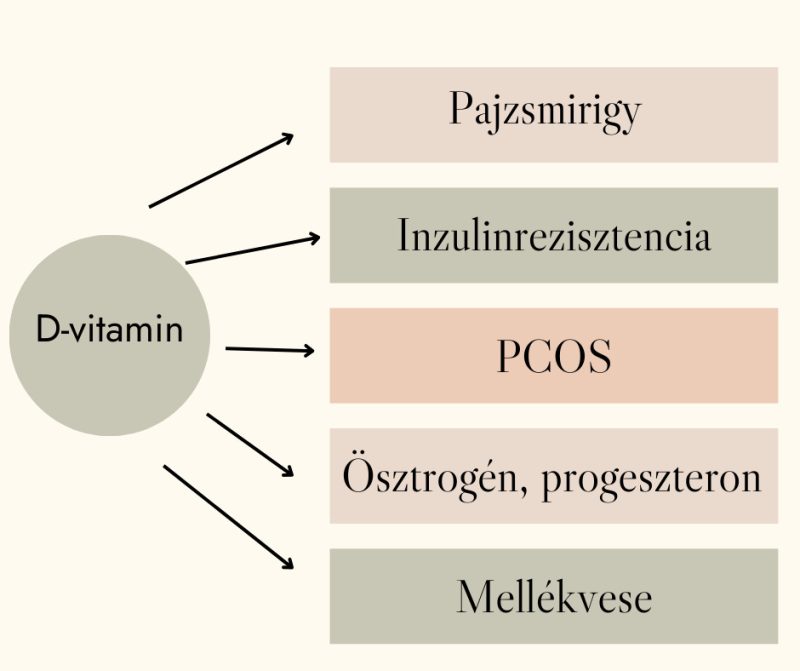
Vitamin D is not just a vitamin, but a hormone precursor that plays a role in the entire
affects how the body works. Think of it as a conductor who
regulates the various hormonal processes, ensuring that everything
to function in perfect harmony.
What problems can a vitamin D deficiency cause?
Supports thyroid health – Vitamin D is essential for the thyroid gland
for it to function properly. A deficiency can lead to a slower metabolism, fatigue,
Hair loss and weight gain may occur.
Improves insulin sensitivity – If you have insulin resistance (IR) or
If you’re struggling with blood sugar problems, you need to pay particular attention to your vitamin D levels. This is the
This vitamin helps to reduce fluctuations in blood sugar levels and sugar cravings.
Reduces the symptoms of PCOS – Women living with PCOS are often deficient in vitamin D,
which may worsen their condition. Adequate supplementation can help regulate the
menstrual cycle, reduce inflammation and support fertility.
Balances oestrogen and progesterone levels – If you have PMS, severe
If you’re struggling with period pain or hormonal acne, vitamin D may help
to normalise oestrogen and progesterone levels.
Supports adrenal gland function – As a result of chronic stress, the body produces more
produces cortisol, which can disrupt hormonal balance. Vitamin D reduces the
stress-induced inflammation, thereby helping the adrenal glands to regenerate.
How should it be taken, and in what quantities?
Taking vitamin D supplements isn’t as simple as you might think, because its absorption depends on
as well as other nutrients.
Here are the key points to note:
The recommended daily intake may vary from person to person, but for an adult it is generally
2000–4000 NE is the optimal dose. In cases of hormonal problems, this may be as high as 5000–8000 NE
may also be justified, especially in winter.
Choose the D3 form! Vitamin D3 (cholecalciferol) is better absorbed and
more effective than D2.
How can you make it more effective?
Take it with some fat! Vitamin D is a fat-soluble vitamin, so it’s best to take it with a meal
At the same time, consume it with a little healthy fat (e.g. avocado, olive oil, nuts).
Don’t forget about vitamin K2 either! Vitamin K2 helps the body to utilise the vitamin D that has been absorbed
calcium reaches the right places (bones, teeth) and does not build up in the blood vessels.
Magnesium is essential! The body needs magnesium in order to,
to convert vitamin D into its active form, so it is worth taking the two nutrients together
to take.
Which MANT product should you choose?

MANT D3+K1+K2 Vitamin Complex Drops the perfect choice, as it contains D3 and K2
contains a combination that ensures maximum absorption and effectiveness!
MANT Tip: How to naturally boost your vitamin D levels—
What’s your level?
Spend more time in the sun! Spend at least 15–30 minutes outdoors every day.
Eat foods rich in vitamin D! Salmon, egg yolks, mushrooms and liver are all
excellent resources.
Don’t just take supplements in winter! Many people start taking vitamin D supplements in winter, and then in spring
stop doing it. Yet a deficiency can occur even in summer if you spend little time
per day.
The specialist section of the blog was written by Brigitta Molnár, a nutritionist.